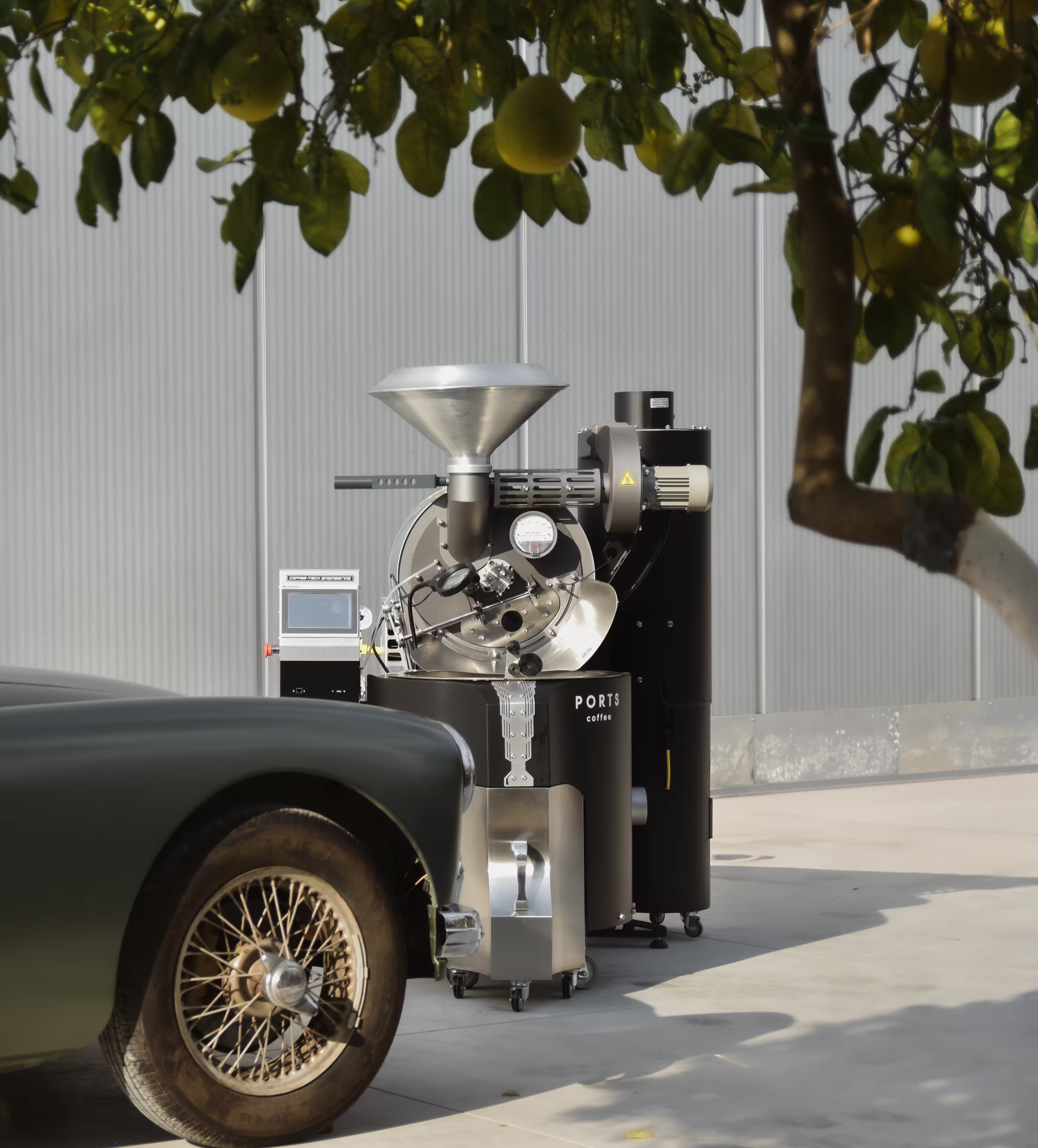
Dans l’industrie moderne du café d’aujourd’hui, les torréfacteurs à gaz sont utilisés par la grande majorité des torréfacteurs, et ce depuis près de 70 ans. Bien que la plupart des personnes vivantes aient toujours apprécié le café torréfié de cette manière, l’utilisation du gaz comme source de combustible est une évolution relativement récente dans l’histoire du café. Dans les années 1950, les torréfacteurs ont progressivement abandonné les torréfacteurs à bois et autres sources de combustible alternatives pour tirer parti du gaz de condensation, alors nouvellement disponible. L’apparition des usines à grande échelle, des chaînes de montage et des infrastructures routières s’est accompagnée de l’industrialisation du secteur du café. Le café n’était plus torréfié par la torréfaction locale ; il entrait désormais dans une phase où il était torréfié dans des installations beaucoup plus grandes, avec des équipements plus imposants et par lots plus importants, puis distribué sur de longues distances pour être mis en vente dans les rayons des magasins répartis sur les territoires intermédiaires. Les principaux moteurs de cette transition ont été la commodité et l’accessibilité, et non pas nécessairement la qualité ou la saveur du produit fini. Les petits torréfacteurs artisanaux locaux n’ont pas pu rivaliser avec les grandes installations dotées de méthodes de production plus modernes et bénéficiant de nouvelles capacités de commercialisation à grande échelle.
Quelques générations plus tard, on assiste à la réapparition, partout dans le monde, de petits torréfacteurs artisanaux qui privilégient désormais la qualité avant tout. Compte tenu des innombrables options qui s’offrent aux consommateurs de café d’aujourd’hui, et du fait que ces petits torréfacteurs ont désormais facilement accès à un marché en pleine expansion, la demande en café de très haute qualité et aux saveurs de niche n’a jamais été aussi forte. Parallèlement à ce renouveau de la qualité artisanale dans la consommation quotidienne de café, on observe une demande pour des machines à torréfaction utilisant des sources de combustible plus traditionnelles afin d’offrir un goût plus authentique. Avec cette évolution des goûts, les torréfacteurs à bois deviennent un outil très prisé des torréfacteurs artisanaux qui souhaitent proposer des profils aromatiques reflétant les anciennes méthodes de chauffage. Lorsqu’elle est maîtrisée, la source d’énergie du bois apporte des saveurs et des arômes supplémentaires qui créent un profil de tasse distinctif et mémorable. Pour les torréfacteurs qui ont la patience et le temps de perfectionner leur art, le café torréfié au bois apporte une touche que les torréfacteurs à gaz conventionnels ne permettent pas d’obtenir.
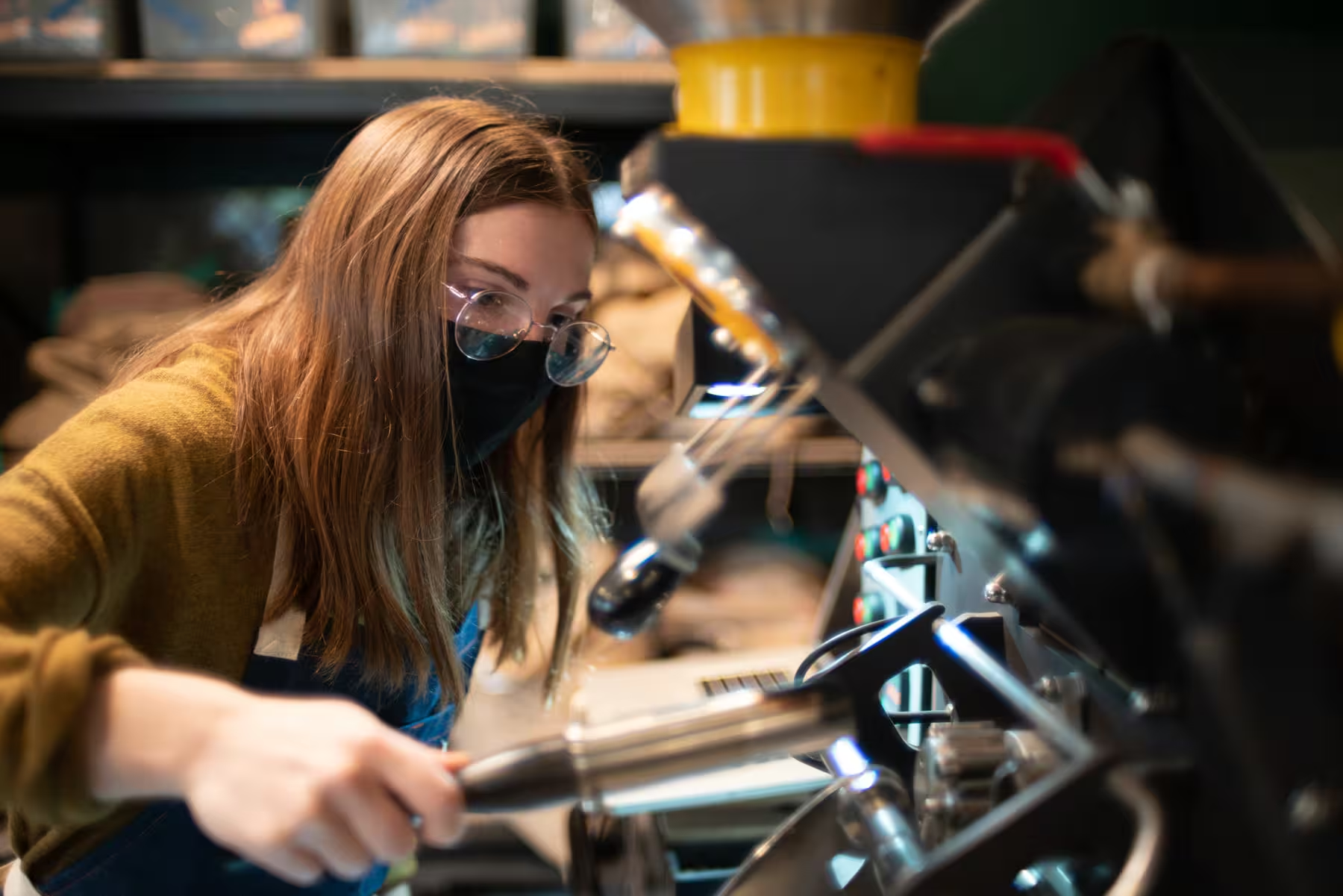
Situé dans le quartier d’Astoria, dans le Queens à New York, Mighty Oak Roasters est un petit café-torréfacteur qui accorde une attention particulière aux moindres détails de son café. Sean Donnelly et Peter Moses ont fondé Mighty Oak Roasters en mai 2019 et connaissent depuis leur ouverture une croissance constante ainsi qu’un soutien sans faille de la part de la population locale. Situé à l'angle d'une rue dans un quartier résidentiel, l'établissement de 1 000 pieds carrés de Mighty Oak Roasters semble s'intégrer à merveille dans ce magnifique quartier à la périphérie du Queens. Grâce à son torréfacteur à bois Ghibli R15, Mighty Oak propose une tasse de café qui se démarque de la masse. Grâce au corps riche et à l’acidité équilibrée de leurs cafés artisanaux, aux notes de chêne, de cerisier, de frêne et d’autres bois durs variés, leurs clients peuvent déguster une tasse de café véritablement unique, différente de tout ce qu’ils ont pu goûter auparavant. J'ai récemment eu l'occasion de m'entretenir avec Sean Donnelly, de Mighty Oak Roasters, au sujet de leurs débuts, de leur expérience en matière de torréfaction au feu de bois, ainsi que des enseignements qu'ils en ont tirés et qui pourraient aider d'autres acteurs dans leur quête de développement et d'options de torréfaction.
Q : Comment vous êtes-vous lancé dans le secteur du café ?
R : J’ai commencé par torréfier moi-même mon café à la maison, en utilisant au départ une poêle en fonte posée sur un barbecue dans mon jardin. Au fil des années, j’ai offert des grains à mes amis et à ma famille, puis certains restaurants du coin m’ont demandé de leur en vendre. Il est alors devenu évident que je devais passer à la vitesse supérieure.
Q : Comment décririez-vous votre entreprise en UNE seule phrase ?
R : Mighty Oak torréfie des cafés soigneusement sélectionnés aux quatre coins du monde, en utilisant du bois dur local issu d'une exploitation durable, grâce au seul torréfacteur à bois de la région.
Q : De quoi êtes-vous le plus fier dans votre entreprise ?
R : Je suis très fier de la façon dont nous nous sommes intégrés à la communauté. J’ai commencé à torréfier chez moi, car il n’y avait ni torréfacteur spécialisé ni café dans notre quartier ; mon objectif était donc de créer la boutique dont j’avais toujours rêvé à proximité.
Q : Parlez-nous un peu de l'emplacement de votre entreprise : la ville, l'ambiance, etc.
R : Nous sommes situés dans le quartier d'Astoria, dans l'arrondissement du Queens à New York. Astoria accueille aussi bien des familles multigénérationnelles que de nouveaux arrivants dans la ville, car il est proche de Manhattan pour les navetteurs, tout en étant un quartier plus calme où règne un fort esprit communautaire.
Q : Qu'est-ce qui a inspiré le nom de votre café ?
R : Je cherchais un nom qui fasse référence à notre procédé de torréfaction au feu de bois, sans pour autant s'y limiter. L'inspiration m'est venue d'un chêne datant du XVIIe siècle, situé près de l'endroit où j'ai grandi, mais les fans de la série télévisée des années 90 « Mystery Science Theater 3000 » reconnaîtront peut-être plus facilement la référence.
Q : Pourquoi avez-vous choisi la torréfaction au bois plutôt que le brûleur à gaz, plus courant ?
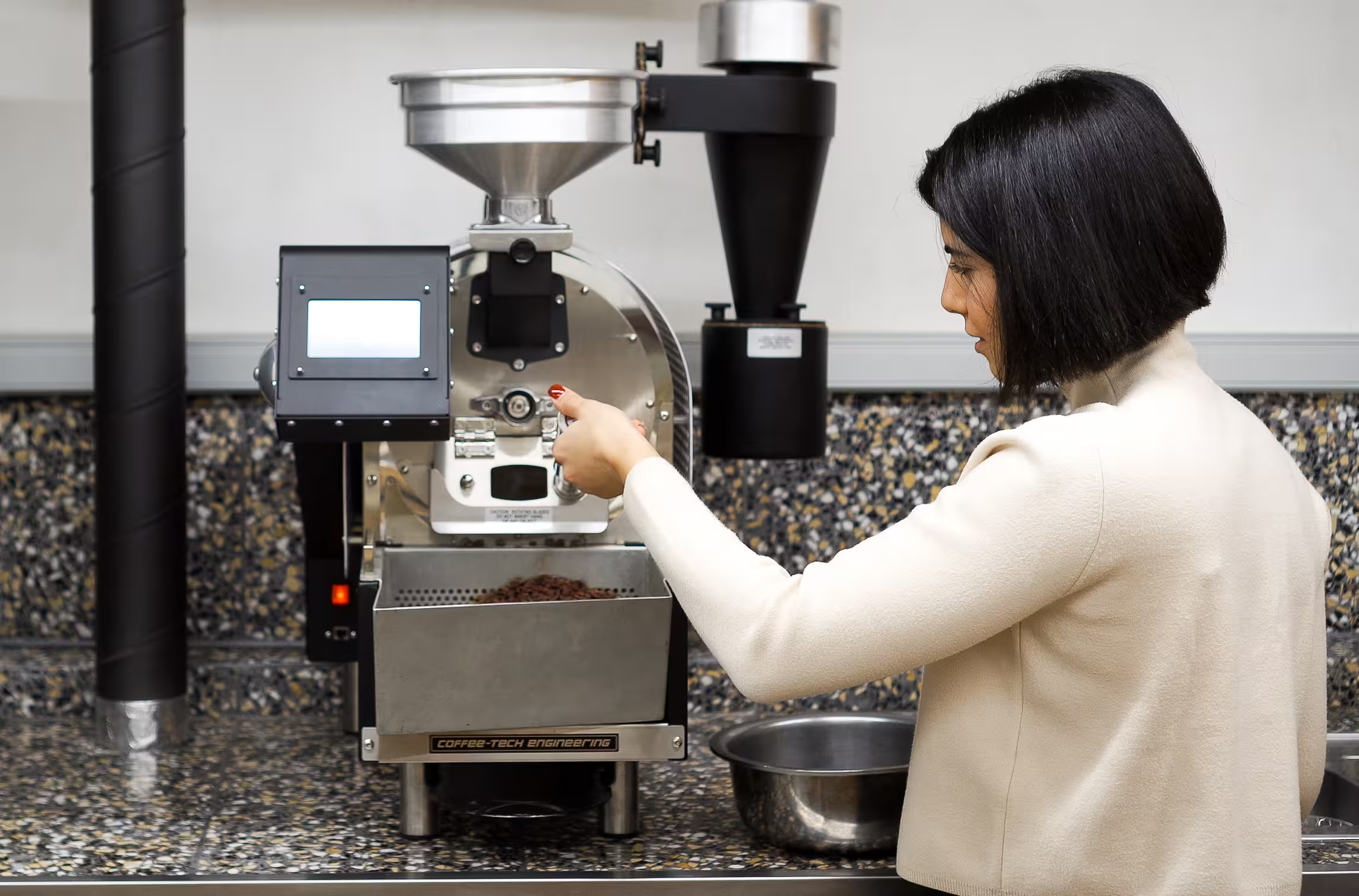
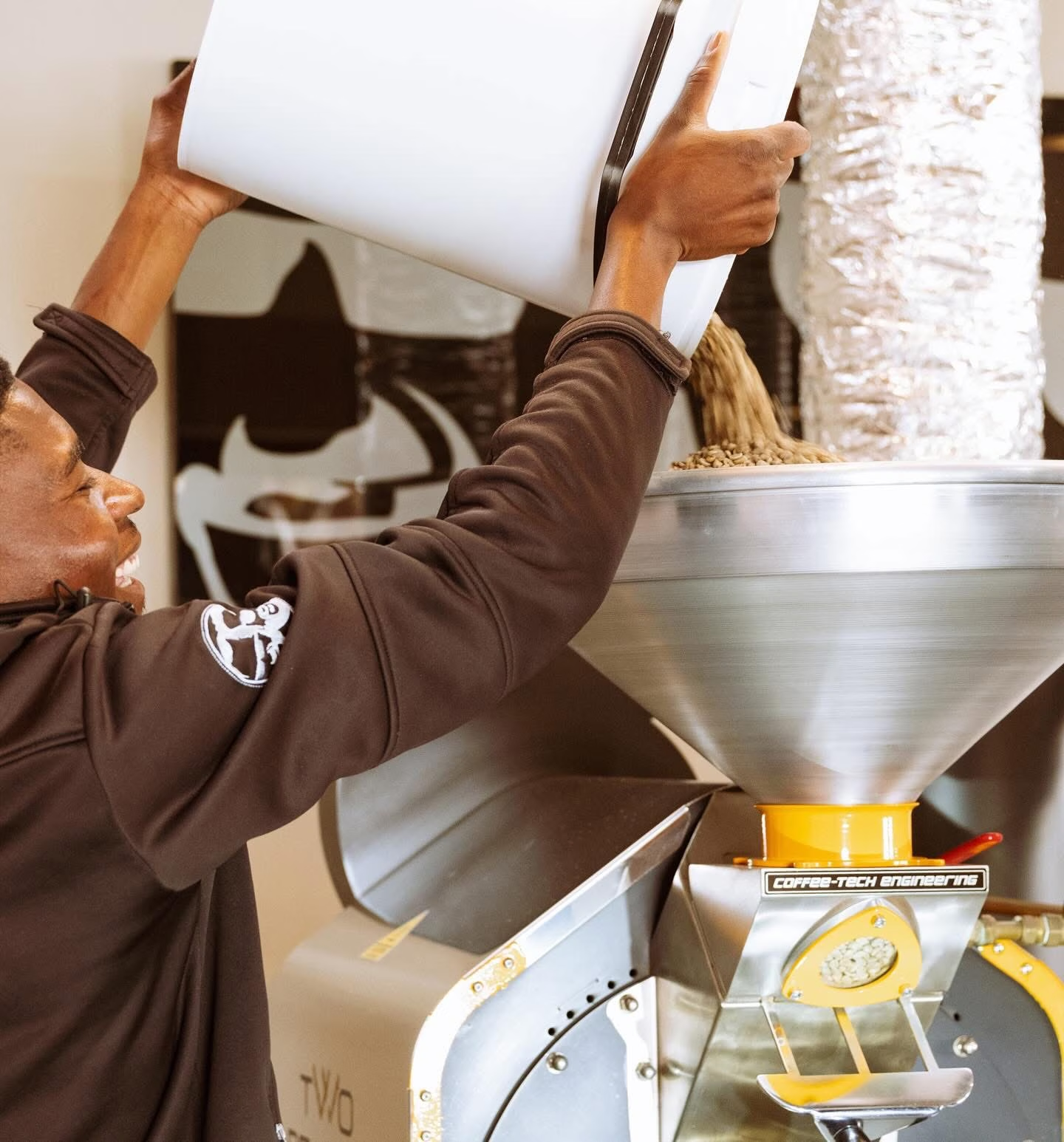
R : J’ai découvert la torréfaction au bois un peu par hasard. À mes débuts, je torréfiais en plein air, sur un feu de bois ou de charbon. Après avoir utilisé un torréfacteur électrique classique, j’ai trouvé qu’il manquait quelque chose, et mes recherches m’ont conduit au CTE Ghibli, le seul torréfacteur que j’ai pu trouver offrant un haut niveau de contrôle tout en utilisant une source de chaleur à feu vif.
Q : Quels sont les principaux avantages et inconvénients de la torréfaction au bois (s’il y en a) ?
R : La torréfaction au bois confère intrinsèquement un profil aromatique différent. Je pense que cela tient en partie à l’humidité contenue dans la chaleur : nous constatons qu’il est en effet possible d’allonger les temps de torréfaction sans que le café ne cuise. Cela se traduit généralement par une plus grande douceur et un profil très équilibré, associé à une légère note aromatique boisée. La difficulté réside dans le fait qu’il faut maîtriser ce procédé, ce qui demande pas mal de pratique, et les ajustements ne peuvent pas être effectués aussi rapidement qu’avec un brûleur à gaz. Si l’on commence avec trop peu de combustible, on risque de se retrouver avec une torréfaction qui stagne ou qui s’emballe en cours de route ; à l’inverse, un feu trop vif ne peut pas être simplement réduit. Il y a également la difficulté de s’approvisionner en combustible, ce dont on n’a plus à se soucier une fois qu’un brûleur à gaz est installé. Heureusement, dans le nord-est des États-Unis, nous disposons d’une grande quantité de bois durs adaptés, provenant principalement des dégâts causés par les tempêtes et des forêts gérées. Malgré tout, fendre et conditionner le bois demande beaucoup de travail pour garantir une combustion optimale.
Q : Recommanderiez-vous à d’autres personnes de s’essayer à la torréfaction au feu de bois ? Est-ce une technique facile à aborder dès le départ, ou conseilleriez-vous d’y venir après avoir acquis un peu d’expérience ?
R : La torréfaction au feu de bois ne convient probablement pas à tout le monde. Si vous débutez, cela peut s’avérer un peu intimidant d’apprendre les bases de la torréfaction tout en essayant de maîtriser le feu. Cela dit, nous avons formé quelques torréfacteurs qui n’ont torréfié que sur notre Ghibli à feu de bois, et ils s’en sont très bien sortis.
Q : Quelle est votre dernière découverte ou votre dernière obsession dans le monde du café ? (méthode de torréfaction, variété de café, méthode de préparation… etc.)
R : Cela ne paraîtra peut-être pas aussi passionnant que les dernières expérimentations anaérobies de la micro-usine Don Eli(même si nous en torréfions justement un en ce moment), mais j’ai dégusté récemment quelques cafés décaféinés tout simplement INCROYABLES. Nous proposons notamment en ce moment un café lavé de Flor Del Café, à Huehuetenango, en expresso, qui est incroyablement doux, pur et complexe. C’est un segment de marché souvent négligé, et nous avons reçu de nombreux retours positifs grâce à notre offre de décaféiné de qualité.
Q : Y a-t-il un mélange ou une origine unique dans lequel votre boutique excelle particulièrement selon vous ?
R : Je suis très fier de tous les cafés que nous sélectionnons, mais il ne fait aucun doute que le mélange « Cold Brew » a été une véritable innovation. Ce que beaucoup de gens apprécient dans le cold brew – son absence d’acidité – est, je pense, la raison pour laquelle je ne l’ai jamais vraiment aimé. J’ai découvert qu’en utilisant un café issu d’un traitement naturel (à sec), je pouvais retrouver certaines notes fruitées et de baies qui ressortent lors d’une extraction à froid. En l’associant à un café lavé provenant d’une région d’altitude relativement élevée d’Amérique centrale, on obtient un profil d’une complexité unique dans ce qui est, par ailleurs, une méthode de préparation plutôt unidimensionnelle.
Q : Pouvez-vous donner un exemple d’une erreur que vous avez commise et que vous auriez corrigée si vous aviez eu la chance de tout recommencer à zéro ?
R : Lorsque nous avons trouvé notre local, nous étions peut-être un peu trop impatients de décrocher l’emplacement que nous voulions, et nous avons sous-estimé le travail que nous aurions à fournir pour ouvrir. L’ancien locataire était une pizzeria abandonnée, et nous avons accepté de reprendre les lieux en l’état. Cela a représenté beaucoup plus de travail que nous ne l’avions imaginé, et a retardé notre ouverture de près d’un an.
Q : Pensez-vous que des défis à venir risquent de peser sur le secteur du café ? Lesquels ?
R : Je pense que la durabilité environnementale deviendra un enjeu plus tôt que nous ne le pensons. Un caféier arabica met des années avant de commencer à produire des cerises, et dans certaines régions, les conditions changent plus rapidement que cela. Ces changements permettent également aux ravageurs et aux maladies de se propager à des altitudes plus élevées, comme nous l’avons vu avec l’épidémie de Roja en Amérique centrale ces dernières années. Tout aussi important : si nous, torréfacteurs et consommateurs, n’ajustons pas nos prix pour tenir compte du coût de production et soutenir un modèle durable pour les producteurs, le café de spécialité cessera d’exister. Le café est avant tout une culture générationnelle, et si la prochaine génération ne voit pas de moyen de subsistance durable, elle cessera tout simplement de le cultiver.
Q : Pouvez-vous nous recommander une bonne exploitation agricole ou une coopérative auprès de laquelle acheter du café vert ?
R : Année après année, l’une de mes préférées reste la station de lavage Suke Quto, située à Guji. Tesfaye Bekele a accompli un travail formidable pour soutenir sa communauté et les terres environnantes, tout en cultivant un café d’une qualité exceptionnelle, un véritable plaisir à torréfier.
Mighty Oak Roasters s'engage à respecter des pratiques environnementales éthiques dans tous les aspects de son activité. L'entreprise s'approvisionne en bois de chauffage auprès d'un arboriste qui récupère des arbres tombés naturellement dans un rayon de 50 miles autour de son site ; elle a également installé un système commercial d'élimination des fumées Avirnaki afin de garantir que les sous-produits de la torréfaction soient capturés en toute sécurité et éliminés sans nuire à l'environnement. Sean et Peter s'efforcent également de s'approvisionner en café auprès d'agriculteurs qui pratiquent une culture socialement et économiquement durable, en nouant des partenariats avec eux afin de s'assurer d'obtenir les meilleurs produits à des prix équitables. En retour, cela offre aux agriculteurs une motivation accrue et des moyens financiers pour entretenir et améliorer les conditions de culture de leurs champs, ce qui se traduit par des récoltes stables, voire meilleures, à l'avenir. Mighty Oak Roasters a réussi à introduire sur le marché actuel du café un café délicieux, traditionnel et torréfié au bois.
Merci à Sean Donnelly
, Chris Nance | 23 février 2023