This essay will offer a new perspective on the way we think about coffee — a fundamental concept that has until now, remained unaddressed. To grasp this new concept, we must first understand what we’re talking about: EEP (Essential Extractable Properties).
Let’s dive in.
The Fundamental Paradox: Mass vs. Extraction
There is a fundamental paradox at the heart of the coffee industry, one so evident and yet rarely acknowledged: coffee is traded by weight, yet consumed as an extract.
At the end of brewing, the majority of the bean’s physical mass is discarded. What remains in the cup is only a fraction — the portion that has become extractable, which we define as EEP. Despite this, the entire value chain, from cultivation through roasting, is structured and priced according to mass rather than extraction potential. This gap reveals a deep misunderstanding, calling for a more precise definition of where the true value of coffee lies.
Not every gram of coffee holds equal value. Only the portion of the bean that has been developed in a form allowing it to dissolve into the cup can be considered meaningful in the final product. EEP, therefore, is not a secondary metric, but rather the defining parameter of a coffee’s ultimate value.
What is EEP (and What It Isn't)
EEP is often confused with surface-level indicators such as color, roast time, or profile curves. These are merely external variables, indirect and often misleading.
- EEP is not color.
- EEP is not duration.
- EEP is not a curve.
Instead, EEP is the direct result of a single factor: the extent to which effective energy has penetrated the core of the bean and transformed its internal structure into quality extractable material. This distinction is essential, as it shifts the focus from appearance and process to substance and outcome.
The Historical Shift and the Issue with Air
To understand how the industry arrived at its current state, one must examine its historical relationship with heat. Traditional roasting methods relied heavily on conduction, requiring precise control over the interaction between hot metal and the bean. This method demanded skill, intuition, and a deep understanding of energy density and transfer. Direct contact between the roasting surface and the bean is inherently unforgiving, leaving little room for error.
Rather than mastering this complexity, much of the industry chose to circumvent it. The transition toward air-based (convection) roasting systems was not merely technological, but philosophical. Air offered a more forgiving medium, one that could envelop the bean and naturally distribute heat uniformly, reducing immediate risks such as scorching. At first glance, this appeared to be an elegant, modern solution.
However, this shift introduced a fundamental limitation. Air is, by nature, a low-density carrier of heat. To deliver sufficient energy, large volumes must be moved at high velocities. In doing so, the system discards direct energy control and becomes entirely dependent on convective parameters. Control over heat flux is replaced by control over airflow, transforming the system into one that is inherently energy-transport-limited rather than energy-controlled.
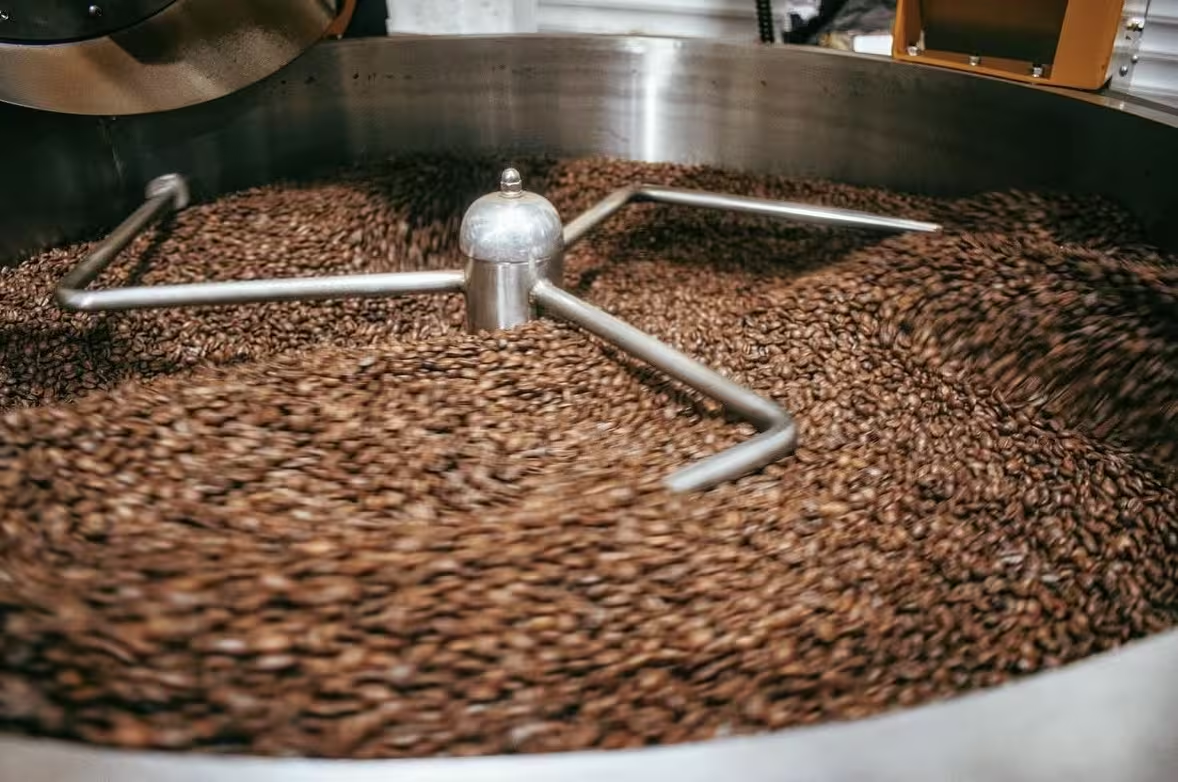
In many modern drum roasters, this transition also occurred without a corresponding redesign of the machine’s architecture. The external structure remained familiar: a rotating drum positioned above a burner. Yet internally, the dynamics changed entirely. The drum, often insulated or double-walled, ceased to function as the primary recipient of heat. Instead, the burner heated the surrounding air, which then entered the drum through undefined and often inconsistent pathways.
This lack of defined energy routing introduces severe thermal instability. Heat rises unpredictably, cold air is drawn in from below, and the result is an inconsistent environment, composed of fluctuating hot and cold zones. The system, lacking a coherent engineering framework for energy distribution, becomes impossible to control in a precise and repeatable manner.
To mitigate these instabilities, manufacturers introduce additional design elements — insulated drums, recirculating systems, and other forms of thermal moderation. Yet these are not true solutions; they function as restraints rather than controls. They attempt to dampen the symptoms of imbalance rather than address its source.
The Solution: How Dynamic Conduction Perfects EEP
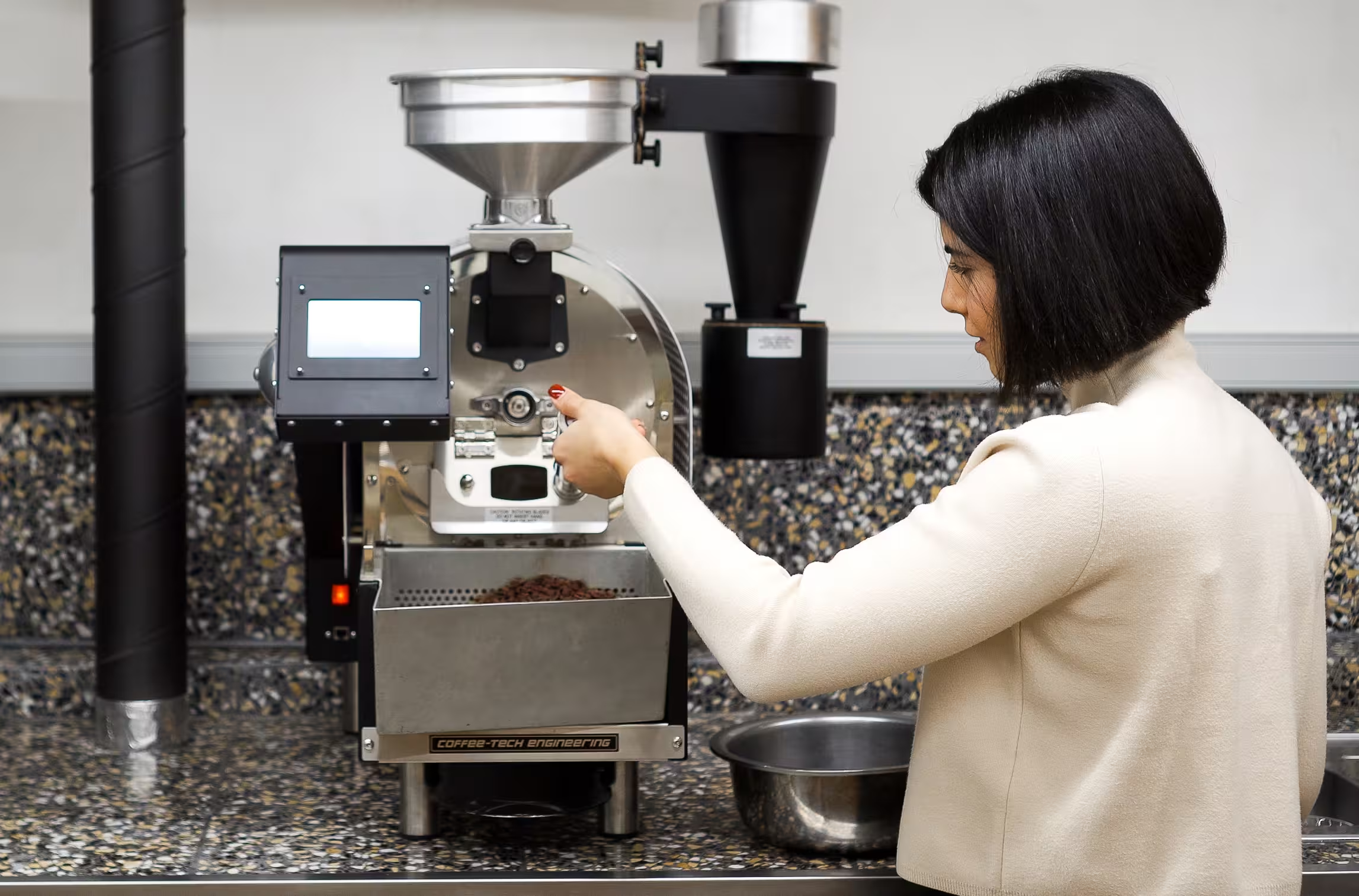
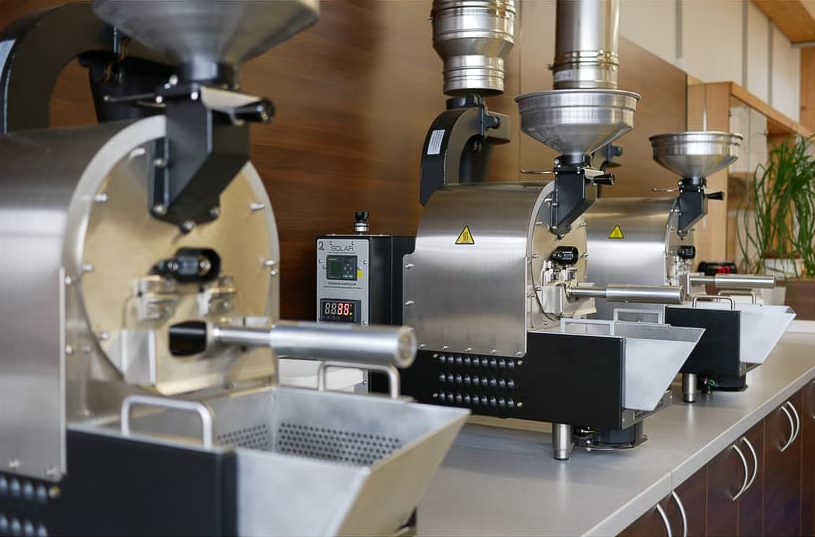
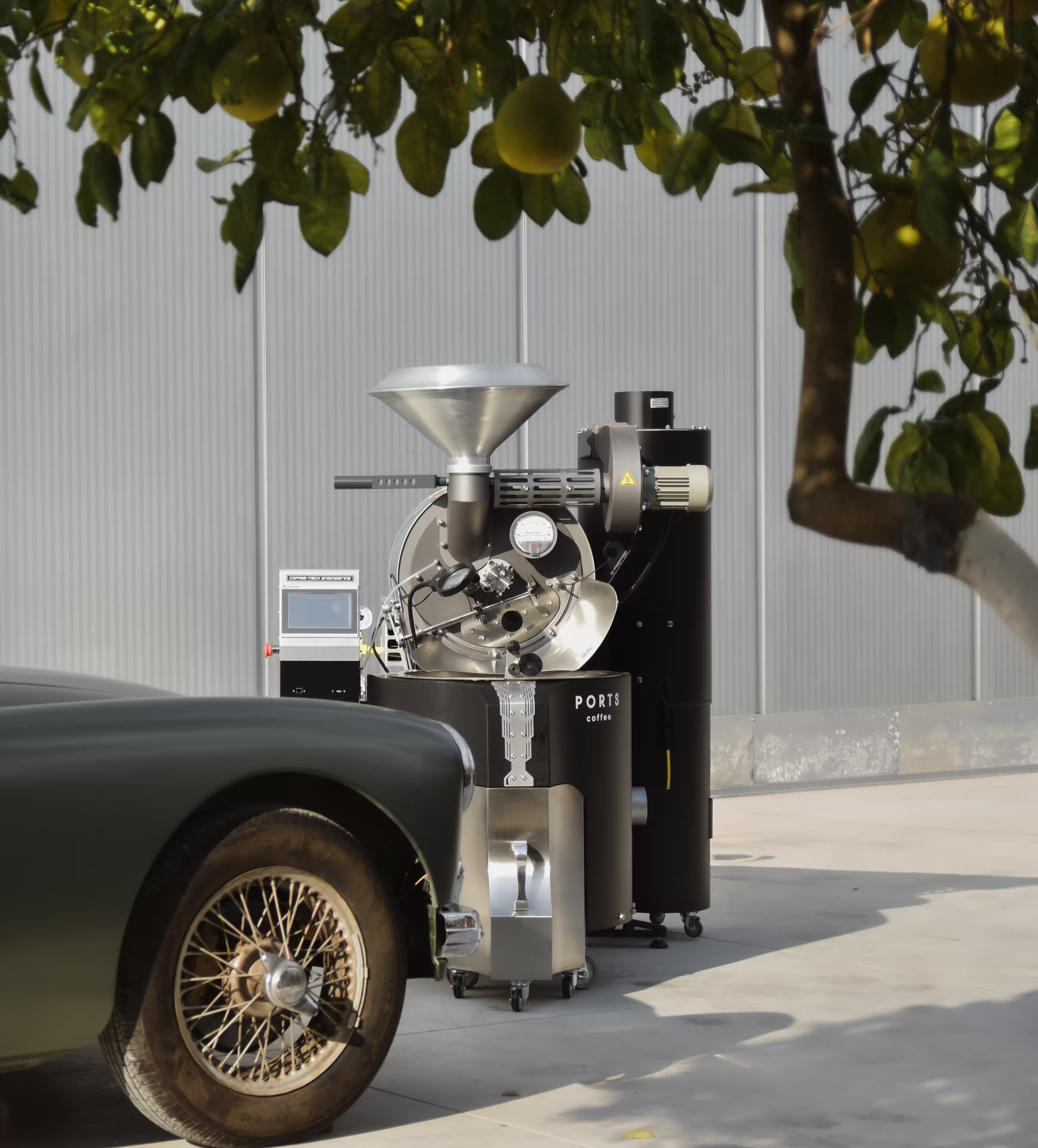
An alternative approach exists — one that predates these developments, yet has been uniquely perfected and utilized by us at Coffee Tech Engineering: the controlled use of dynamic conduction.
This is not achieved through heavy, inert systems like massive cast iron drums or thermally sluggish stainless-steel structures, but rather through a responsive, precisely calibrated interaction between the heat source and the material.
Within our framework, the drum is not a passive reservoir of stored heat, but an active interface:
- Immediate Energy Transfer: The burner is directly coupled to a thermally agile drum, enabling instant and predictable energy transfer without thermal lag or residual memory.
- Redefined Airflow: Air is no longer the primary carrier of heat, but a secondary tool for transport and purposeful movement. By employing relatively small quantities of air — reduced by as much as 90% compared to conventional designs — and delivering it at high velocity, we create a powerful vortex airflow pattern inside of the drum.
The purpose of this vortex is not to heat the bean directly, but to guide and redistribute conductive energy with precision. The result is a coherent, highly efficient thermal cycle that reduces energy consumption by approximately one-third compared to conventional systems.
The Impact on the Cup
The true significance of dynamic conduction extends far beyond energy efficiency; it directly dictates the development of EEP.
In air-dominant systems, heat transfer tends to concentrate at the surface of the bean. Penetration is gradual, leaving a steep thermal gradient between the exterior and interior. Under these conditions, volatile compounds — many of which are essential to the formation of EEP — are driven off before they can integrate into the bean’s structure. The bean undergoes heating, but lacks true internal development.
By contrast, our dynamic conduction facilitates deeper, uniform energy penetration. Direct contact allows for rapid transfer of energy straight into the core. The bean is internally transformed, maximixing EEP.
[Air-Dominant Roasting] -> Concentrates heat on the surface (High gradient, lost EEP)
[Dynamic Conduction] -> Penetrates directly to the core (Uniform development, high EEP)
The outcome is evident in the physical, chemical, and sensory integrity of the coffee. Coffee exhibiting high EEP is characterized by greater body, and improved extraction stability.
Conclusion
Ultimately, the distinction between roasting methodologies is not defined by the quantity of heat generated, but by the manner in which that heat is transferred and controlled. The core objective is for the energy to reach the bean's center uniformly. Regardless of the chosen roasting style or profile, the energy must penetrate deep into the core to preserve Essential Extractable Properties.
EEP should not be understood as an accidental byproduct of time or color, but as the direct outcome of precise energy management. It is the vital bridge between raw commodity and final extraction — the definitive metric that unlocks the true value of the green coffee you buy.